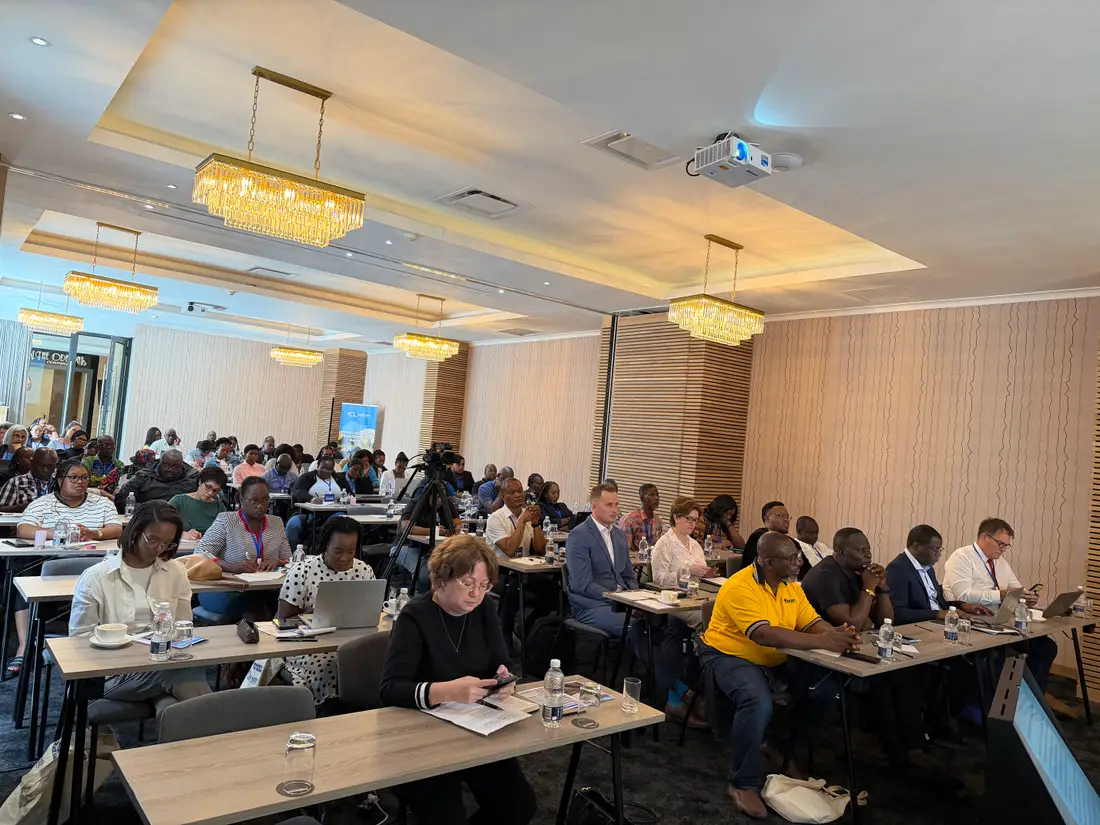
A four-day Pan-African summit costs a senior executive between $8,000 and $20,000 once flights, accommodation, registration and opportunity cost are properly tallied. Most companies cannot tell you what they got for it. The leaders who can are running a discipline most of their peers have never been taught.
There is an open secret in corporate Africa: the conference circuit is treated as a perk, marketed as strategy, and measured as neither. CFOs sign off on six-figure annual conference budgets without the line-item interrogation they would apply to a software contract one-tenth the size. The result is predictable. Senior executives return from Mining Indaba or the Africa CEO Forum with a stack of business cards, three reaffirmed friendships, and no incremental pipeline.
It does not have to be this way. A small cohort of operators — typically those running corporate development functions at acquisitive Pan-African groups — treat conference attendance as an investment instrument with a defined hurdle rate. They run a three-phase discipline that is unglamorous, replicable, and capable of generating return multiples that would embarrass most marketing spend.
Phase one: pre-event, the work nobody does.
The investment is won or lost in the two weeks before the event begins. The discipline is straightforward in principle and rare in practice.
- Define three to five named outcomes before booking the flight: a specific deal advanced, a specific hire identified, a specific regulatory relationship initiated. Vague outcomes produce vague returns.
- Build a target list of 20 to 30 attendees you intend to meet, ranked by strategic value, with a one-line note on what you want from each interaction.
- Pre-book at least 60% of those meetings before arrival. The remaining 40% emerges organically; the 60% does not.
- Read the published agenda and dossier on the five most important attendees. Walking into a meeting with substantive context is the cheapest competitive advantage available.
- Write a 200-word pre-mortem: what does failure look like, and what would have caused it?
Phase two: in-event, pipeline as a verb.
The leaders who extract value at events do not attend most of the keynotes. They use plenary sessions as low-cost background and concentrate effort on the corridors, the curated dinners and the structured 1:1s. They take notes — not on the content of public sessions, which will be available in summary form within 48 hours, but on the texture of private conversations: who is hiring, who is exiting, who is quietly raising, who is unhappy with their auditor.
“I did not learn anything from the panel. I learned everything from the woman sitting next to me at the panel.”
The most underrated in-event practice is the daily debrief. Twenty minutes at the end of each day, ideally with one or two colleagues, capturing names, commitments, and follow-ups. Memory degrades by 70% within 48 hours. A debrief converts ephemeral signal into durable pipeline.
Phase three: post-event, where the money is made.
This is the phase where 80% of the value evaporates. The senior executive returns to the desk, finds 600 unread emails, and the conference recedes into an anecdote. The discipline that prevents this is administrative, not heroic.
Follow-up notes go out within 72 hours. Every commitment made in conversation — the introduction promised, the document offered, the second meeting agreed — is logged in CRM with an owner and a date. A 30-day check-in is calendared at the moment of return. A 90-day review measures the named outcomes set in phase one against actual progress: deals advanced, hires made, partnerships formed.
The accountability piece.
The single intervention that transforms conference ROI is making someone responsible. Not the executive who attended — the chief of staff, the corporate development analyst, the EA. A named individual whose explicit job is to track the post-event funnel and report it back to the executive committee. Companies that institute this discipline routinely report 3-5x improvements in measurable conference outcomes within two annual cycles.
The brutal truth is that conference attendance without this scaffolding is professionally enjoyable corporate tourism. With it, it is one of the highest-leverage business development activities available to a senior leader operating across African markets. The difference is not the conference. It is the discipline brought to it.
Written by
Kwame Asante
Director of Strategic Partnerships, AfriCap Hub