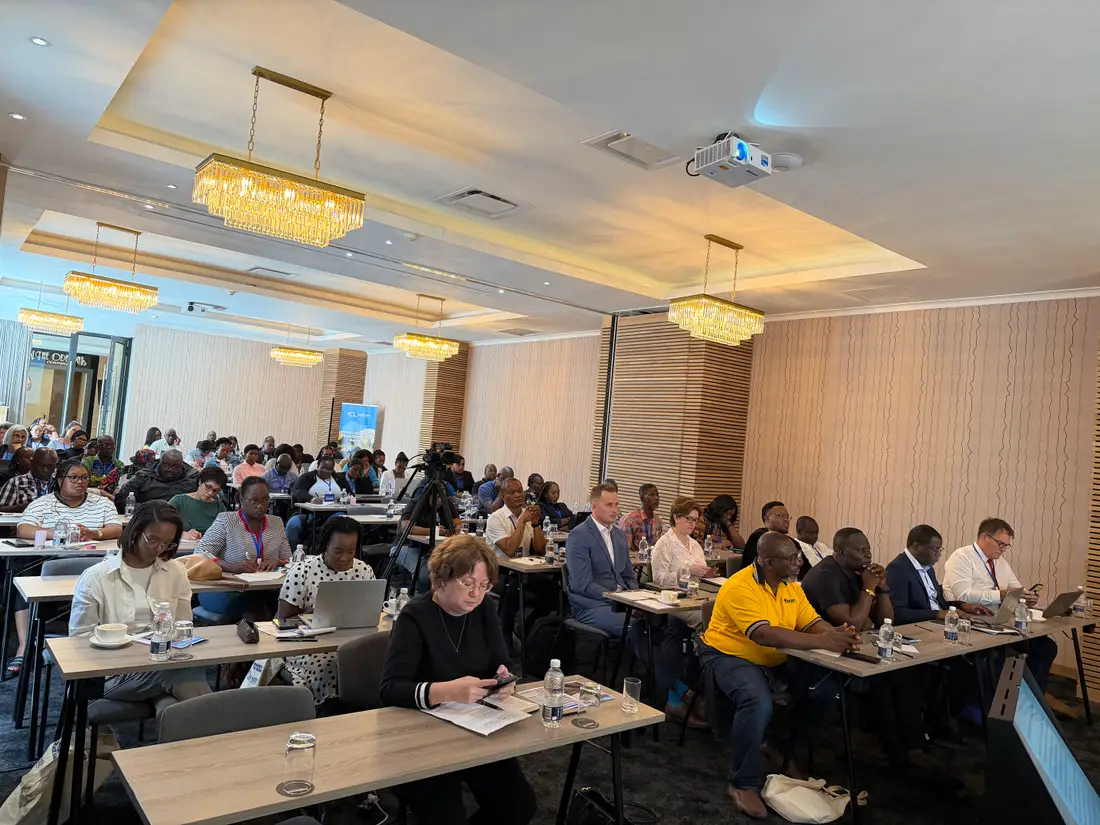
A Lagos-based CFO who closes deals in Nairobi, Kigali and Abidjan does not have an unusual job. She has an unusual rolodex. Across the continent, the leaders who scale fastest are the ones treating relationship capital as a P&L line — and quietly engineering around the structural friction that defeats everyone else.
Ask any Pan-African operator what slows their deal pipeline more than capital costs, and the answer is rarely capital. It is the simple problem of being in the same room as the right person, on the right day, with the right context. The continent's professional class is dispersed across 54 jurisdictions, six time zones, and a visa regime that the African Union's own Free Movement Protocol has, as of early 2026, only been ratified by four member states.
The result is a paradox. The AfCFTA promises a single market of 1.3 billion people and a projected $3.4 trillion in combined GDP. Yet the executives meant to build the businesses that fill that market still spend disproportionate energy navigating border posts, mismatched banking rails, and the cost of a Johannesburg-to-Dakar return ticket that often exceeds the same distance flown via Europe.
The structural friction nobody costs in.
The Africa Visa Openness Index, published annually by the AfDB, has crept upward — but the headline disguises the texture. A Nigerian executive can travel visa-free or visa-on-arrival to roughly 27 African countries; a Senegalese one to 42. For a Pan-African board of directors, that asymmetry shows up as quorum risk every quarter.
Add the time-zone problem. A regional ExCo with members in Cairo, Lagos, Nairobi and Cape Town has, on a generous interpretation, four hours of overlapping working time. WhatsApp groups paper over the gap; they do not close it. The networks that survive are the ones that compress synchronous time and over-invest in asynchronous trust.
“Trust on this continent is built in person and maintained on WhatsApp. Reverse the order and you have an acquaintance, not a network.”
What the operators who get it right do differently.
We have observed a consistent pattern among leaders running genuinely cross-border businesses — the Aliko Dangote-tier industrialists, the second-tier banking CEOs expanding into Francophone West Africa, the founders building from Kigali into the EAC and beyond. Their network behaviour is deliberate, not incidental.
- They anchor on three to five hub cities and accept they will not be everywhere — typically Lagos, Nairobi, Johannesburg, Cairo, and one Francophone hub (Abidjan or Casablanca).
- They batch their travel against convening calendars: AfCFTA Business Forum, Africa CEO Forum, Mining Indaba, AVCA — using the gravitational pull of these events to compress 30 meetings into four days.
- They run small, recurring private gatherings — 12 to 20 people, off the record, no agenda — and protect those rooms with the same discipline they apply to board meetings.
- They invest in one or two trusted intermediaries per region rather than trying to maintain 200 weak ties.
- They use closed digital networks (WhatsApp, Signal groups, members-only platforms) as the connective tissue between physical convenings.
A playbook, not a hack.
The leaders compounding network value are not the most extroverted. They are the most systematic. They keep a written list of the 50 relationships that matter to their five-year strategy, and they touch each one — substantively, not via LinkedIn reaction — at least once a quarter. They send the article. They make the introduction without being asked. They show up at the funeral, the wedding, the IPO. The currency is reciprocity, and it accrues interest.
There is a harder truth underneath this. The continental network premium is real, and it is not equally available. It rewards those who can afford the airfare, secure the visas, and absorb the time cost of relationship maintenance. Until free movement becomes substantive rather than aspirational, network capital on this continent will remain a competitive moat — which is precisely why the operators who understand its mechanics are quietly widening the gap.
Written by
Adaeze Okonkwo
Contributing Editor, AfriCap Hub editorial